
The gentrification of Nigeria

Quote from KayodeK on May 14, 2026, 7:46 pm
There was a time in Nigeria when poverty still had dignity. A poor man could rent a room close to his place of work. A civil servant could dream of owning a modest bungalow before retirement. A roadside food seller could afford school fees. A university graduate, even while unemployed, could at least breathe within the society without feeling like an illegal occupant in his own country. That Nigeria is disappearing. What we are witnessing today is not merely inflation, economic reform or the hardship that government spokespeople love to describe as “temporary pains”. It is the gentrification of Nigeria — the systematic redesign of the nation for the comfort of the elite and the displacement of the poor from economic relevance.
Traditionally, gentrification refers to a process where wealthy people move into previously affordable neighbourhoods, driving up rents and pushing poorer residents out. But Nigeria has elevated the concept beyond urban planning. Here, the entire country is being gentrified. The poor are being psychologically, economically and socially evicted from the Nigerian dream.
The latest evidence emerged from the shocking affirmation by the Federal Government – indeed supported by the stance of an insipid legislature – that petroleum subsidy should never again be contemplated. One would think that elected representatives, in a country where over 130 million people are multidimensionally poor, would at least pretend to understand the suffering in the land. In the same way, the US, UK and other democracies still have subsidies and extend welfare and food stamps to poor citizens.
But, no, the conversation among Nigerians in power now sounds like a boardroom discussion among investment bankers insulated from the cries outside their tinted windows. The issue is not whether the subsidy was corrupt or sustainable; reasonable arguments exist on both sides. The issue is the frightening detachment of the ruling class from the survival anxieties of ordinary Nigerians. When fuel prices rise, everything rises – transportation, food, rent, school fees, and healthcare. Yet the salaries of workers remain stagnant, while unemployment keeps swelling like a neglected wound.
The elite are unmoved because they do not buy fuel like ordinary Nigerians. Most of them have official allocations, security votes, convoys, multiple streams of public-funded comfort and residences powered by industrial generators. Their children school abroad. Their healthcare is outsourced to Europe or Asia. They experience Nigeria mainly through police sirens and air-conditioned windows. So, when they debate subsidy removal, they are not discussing survival. They are discussing fiscal theory.This is the tragedy of modern Nigerian politics: the mainstream political class — whether ruling party or opposition — now largely belongs to the same elite fraternity. They fight publicly but dine privately. They exchange insults on television and exchange handshakes at elite weddings. They decamp between parties without changing ideology because ideology itself has become irrelevant. The poor man watching them on television is merely an audience member in a theatre of elite negotiation.
That is why even many opposition politicians no longer speak passionately about poverty. They also own luxury properties. They, too, move with convoys. They too invest in the same gated estates where plots now cost more than what an average worker earns in thirty years.
In fact, three years ago, when newly elected Labour Party legislators accepted to share in the largesse of brand new luxury SUVs, Mr Peter Obi – a major opposition figure – justified the bounty by saying they needed it for their work. To many, that was a betrayal of the poor who wanted something different. It was almost the same way late President Muhammadu Buhari let down the poor (Talakawa) who fought for him to become president.Nigeria’s housing sector perfectly illustrates this gentrification. In Abuja, Lagos, Port Harcourt and increasingly in state capitals, housing has become an elite ritual rather than a social necessity. Developers build estates that most Nigerians cannot afford, yet policymakers celebrate them as signs of progress. The urban skyline rises while the urban poor sink.
A country where minimum wage earners cannot rent decent accommodation near their workplaces is not developing; it is displacing its citizens internally. The irony is painful. The people who build the cities cannot live in the cities. Teachers, nurses, junior civil servants, artisans and traders are pushed farther away into overcrowded outskirts lacking roads, water and security. They spend huge portions of their income commuting daily into cities designed for the wealthy. Even language has changed. We now hear phrases like “premium living”, “luxury apartments”, “exclusive residences”, and “smart estates” in a nation where millions cannot afford food. The elite are building islands of comfort in an ocean of suffering. And this mentality now shapes governance. Policies are increasingly designed to impress international financial institutions, investors and rating agencies, while local realities are treated as unfortunate side effects. Economic success is measured by macroeconomic graphs rather than the number of families that can eat three meals daily. Meanwhile, insecurity grows quietly beneath this inequality.
History teaches us that societies become unstable when the majority begin to feel permanently excluded from opportunity. Hunger eventually becomes political. Frustration matures into anger. When citizens lose faith that hard work can improve their lives, desperation becomes attractive. Yet many Nigerian elites still behave as though poverty is merely a motivational challenge rather than a structural injustice.
One of the most dangerous consequences of this gentrification is the erosion of empathy. The poor are increasingly viewed not as citizens deserving protection, but as inconvenient statistics. Their protests are dismissed as ignorance. Their complaints are labelled anti-reform sentiments. Their suffering is intellectualised by people who will never experience it. But governance without empathy eventually becomes oppression decorated with grammar.
A nation cannot sustainably develop by concentrating comfort among a tiny class while exporting hardship to the majority. Economic reforms that ignore social protection create resentment. Development that excludes the poor becomes architectural cruelty. The Nigerian political elite must remember that democracy is not merely about elections; it is about representation. If the people’s representatives no longer understand the people’s pain, then democracy itself begins to lose meaning.The true measure of a nation is not the number of billionaires it produces or the luxury estates decorating its capitals. The true measure is whether ordinary citizens can live with dignity. Can workers afford transportation? Can families afford food? Can young couples afford rent? Can pensioners buy medicine? Can graduates dream again? These are the questions that matter. Until Nigeria’s leaders begin to see the country not merely as an economic project but as a human community, the gentrification will continue. The rich will keep building higher fences while the poor sink deeper into hopelessness. But no nation survives for long when prosperity becomes a gated estate.
This is a call for us to unite under climate change. We may be divided by tribe, religion, language and politics, but climate change is proving to be the great equaliser of suffering. Floods do not ask for ethnicity before sweeping away homes. Drought does not check party membership before destroying farms. Desertification does not respect political slogans. Rising heat does not care whether one is Christian or Muslim, North or South.
The wealthy can escape extreme heat with air conditioners and generators. They can relocate from flood-prone areas. They can import food when local harvests fail. But the ordinary Nigerian has no such luxury. The fisherman battling polluted waters, the farmer watching crops wither under strange weather patterns, the market woman whose goods are destroyed by floods, and the urban poor trapped in overcrowded slums are the victims of the climate crisis. The climate emergency is also a poverty emergency. Therefore, climate justice must become a people’s movement – a political ideology, especially for Nigerians that never had one.
https://www.google.com/search?sca_esv=be715597135c0019&sxsrf=ANbL-n55-P19MZOi541p1Cu_RNmL3Npgbg:1778787706979&udm=2&fbs=ADc_l-aN0CWEZBOHjofHoaMMDiKp0UJuhqwKhR0QUhF54-6jIYFfWbU_Clyew-1Wh7zkL7EUcewkj-Y5mEXWvVf2-8S7JwVKiSvr_7KtEyhTBuz8m-laE5BSreY6JxyNvVut3K1Xka4K6bo_SyH-1dYXn2X55aQexnztra0s6pcWzRjaeDEuDy0ONtPBBDbSkghiRTuqJbVKzVKT5Rp_Inz1Kq5LAyhKHA&q=The+gentrification+of+Nigeria&sa=X&ved=2ahUKEwjjlZ3LxLmUAxXVTkEAHa0WLnIQtKgLegQIFRAB&biw=1366&bih=641&dpr=1#sv=CAMSVhoyKhBlLW5jaEt6emhWUF9MUm9NMg5uY2hLenpoVlBfTFJvTToOaU1kWTI3VGxkWmdRWU0gBCocCgZtb3NhaWMSEGUtbmNoS3p6aFZQX0xSb00YADABGAcgr7fc3wFKCBABGAEgASgB
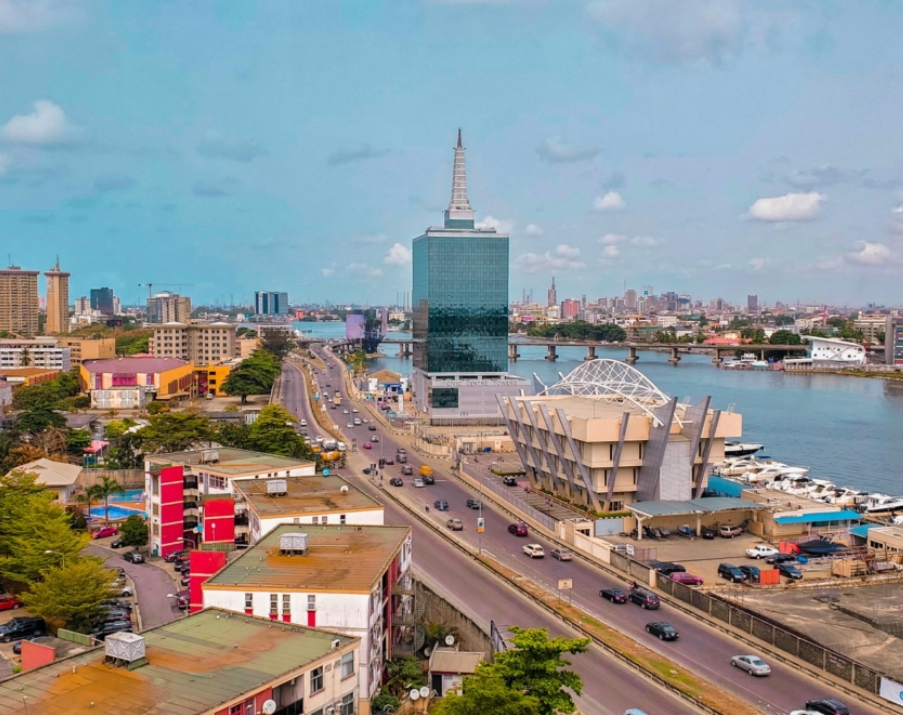
There was a time in Nigeria when poverty still had dignity. A poor man could rent a room close to his place of work. A civil servant could dream of owning a modest bungalow before retirement. A roadside food seller could afford school fees. A university graduate, even while unemployed, could at least breathe within the society without feeling like an illegal occupant in his own country. That Nigeria is disappearing. What we are witnessing today is not merely inflation, economic reform or the hardship that government spokespeople love to describe as “temporary pains”. It is the gentrification of Nigeria — the systematic redesign of the nation for the comfort of the elite and the displacement of the poor from economic relevance.
Traditionally, gentrification refers to a process where wealthy people move into previously affordable neighbourhoods, driving up rents and pushing poorer residents out. But Nigeria has elevated the concept beyond urban planning. Here, the entire country is being gentrified. The poor are being psychologically, economically and socially evicted from the Nigerian dream.
The latest evidence emerged from the shocking affirmation by the Federal Government – indeed supported by the stance of an insipid legislature – that petroleum subsidy should never again be contemplated. One would think that elected representatives, in a country where over 130 million people are multidimensionally poor, would at least pretend to understand the suffering in the land. In the same way, the US, UK and other democracies still have subsidies and extend welfare and food stamps to poor citizens.
But, no, the conversation among Nigerians in power now sounds like a boardroom discussion among investment bankers insulated from the cries outside their tinted windows. The issue is not whether the subsidy was corrupt or sustainable; reasonable arguments exist on both sides. The issue is the frightening detachment of the ruling class from the survival anxieties of ordinary Nigerians. When fuel prices rise, everything rises – transportation, food, rent, school fees, and healthcare. Yet the salaries of workers remain stagnant, while unemployment keeps swelling like a neglected wound.
This is the tragedy of modern Nigerian politics: the mainstream political class — whether ruling party or opposition — now largely belongs to the same elite fraternity. They fight publicly but dine privately. They exchange insults on television and exchange handshakes at elite weddings. They decamp between parties without changing ideology because ideology itself has become irrelevant. The poor man watching them on television is merely an audience member in a theatre of elite negotiation.
That is why even many opposition politicians no longer speak passionately about poverty. They also own luxury properties. They, too, move with convoys. They too invest in the same gated estates where plots now cost more than what an average worker earns in thirty years.
Nigeria’s housing sector perfectly illustrates this gentrification. In Abuja, Lagos, Port Harcourt and increasingly in state capitals, housing has become an elite ritual rather than a social necessity. Developers build estates that most Nigerians cannot afford, yet policymakers celebrate them as signs of progress. The urban skyline rises while the urban poor sink.
And this mentality now shapes governance. Policies are increasingly designed to impress international financial institutions, investors and rating agencies, while local realities are treated as unfortunate side effects. Economic success is measured by macroeconomic graphs rather than the number of families that can eat three meals daily. Meanwhile, insecurity grows quietly beneath this inequality.
History teaches us that societies become unstable when the majority begin to feel permanently excluded from opportunity. Hunger eventually becomes political. Frustration matures into anger. When citizens lose faith that hard work can improve their lives, desperation becomes attractive. Yet many Nigerian elites still behave as though poverty is merely a motivational challenge rather than a structural injustice.
One of the most dangerous consequences of this gentrification is the erosion of empathy. The poor are increasingly viewed not as citizens deserving protection, but as inconvenient statistics. Their protests are dismissed as ignorance. Their complaints are labelled anti-reform sentiments. Their suffering is intellectualised by people who will never experience it. But governance without empathy eventually becomes oppression decorated with grammar.
A nation cannot sustainably develop by concentrating comfort among a tiny class while exporting hardship to the majority. Economic reforms that ignore social protection create resentment. Development that excludes the poor becomes architectural cruelty. The Nigerian political elite must remember that democracy is not merely about elections; it is about representation. If the people’s representatives no longer understand the people’s pain, then democracy itself begins to lose meaning.The true measure of a nation is not the number of billionaires it produces or the luxury estates decorating its capitals. The true measure is whether ordinary citizens can live with dignity. Can workers afford transportation? Can families afford food? Can young couples afford rent? Can pensioners buy medicine? Can graduates dream again? These are the questions that matter. Until Nigeria’s leaders begin to see the country not merely as an economic project but as a human community, the gentrification will continue. The rich will keep building higher fences while the poor sink deeper into hopelessness. But no nation survives for long when prosperity becomes a gated estate.
This is a call for us to unite under climate change. We may be divided by tribe, religion, language and politics, but climate change is proving to be the great equaliser of suffering. Floods do not ask for ethnicity before sweeping away homes. Drought does not check party membership before destroying farms. Desertification does not respect political slogans. Rising heat does not care whether one is Christian or Muslim, North or South.
The wealthy can escape extreme heat with air conditioners and generators. They can relocate from flood-prone areas. They can import food when local harvests fail. But the ordinary Nigerian has no such luxury. The fisherman battling polluted waters, the farmer watching crops wither under strange weather patterns, the market woman whose goods are destroyed by floods, and the urban poor trapped in overcrowded slums are the victims of the climate crisis. The climate emergency is also a poverty emergency. Therefore, climate justice must become a people’s movement – a political ideology, especially for Nigerians that never had one.

Quote from Jide_Mo on May 14, 2026, 8:14 pmIt’s funny how the government uses the US or UK as examples for removing subsidies, but they conveniently forget that those countries have unemployment benefits, food stamps, and working public transport. You can’t import the ‘pain’ of the West without importing their ‘safety nets’.
It’s funny how the government uses the US or UK as examples for removing subsidies, but they conveniently forget that those countries have unemployment benefits, food stamps, and working public transport. You can’t import the ‘pain’ of the West without importing their ‘safety nets’.

Quote from IbukunI on May 14, 2026, 8:32 pmI remember when a university graduate could stay in a decent ‘face-me-I-face-you’ apartment and hope for a better life. Today, even that room is out of reach for a starter. We are breeding a generation of angry, displaced, and hopeless youth who feel like strangers in their fatherland.
I remember when a university graduate could stay in a decent ‘face-me-I-face-you’ apartment and hope for a better life. Today, even that room is out of reach for a starter. We are breeding a generation of angry, displaced, and hopeless youth who feel like strangers in their fatherland.

Quote from Obinna_O3 on May 14, 2026, 11:53 pmThe author is right about the opposition—they are all the same ‘elite fraternity.’ Whether it’s PDP, APC, or even the ‘Third Force’ leaders accepting luxury SUVs, it proves that once they get into that circle, the suffering of the masses becomes just a ‘macroeconomic statistic’ to be debated over wine.
The author is right about the opposition—they are all the same ‘elite fraternity.’ Whether it’s PDP, APC, or even the ‘Third Force’ leaders accepting luxury SUVs, it proves that once they get into that circle, the suffering of the masses becomes just a ‘macroeconomic statistic’ to be debated over wine.

Quote from JokeJ3 on May 15, 2026, 12:12 amNigeria is not an economic project; it is a human community. Until our leaders stop seeing us as ‘consumers’ and start seeing us as citizens with a right to dignity, these luxury skyscrapers will just be monuments to our national inequality.
Nigeria is not an economic project; it is a human community. Until our leaders stop seeing us as ‘consumers’ and start seeing us as citizens with a right to dignity, these luxury skyscrapers will just be monuments to our national inequality.

Quote from TokeT3 on May 15, 2026, 12:35 amIt’s the detachment for me. When a politician says ‘let the poor breathe’ while living in a house powered by a 100KVA generator, it’s a mockery. They don’t know the price of a ‘mudu’ of garri or the cost of a liter of fuel because they don’t pay for anything out of their own pockets.
It’s the detachment for me. When a politician says ‘let the poor breathe’ while living in a house powered by a 100KVA generator, it’s a mockery. They don’t know the price of a ‘mudu’ of garri or the cost of a liter of fuel because they don’t pay for anything out of their own pockets.

Quote from WumiStar on May 15, 2026, 1:12 amGentrification is now a psychological war. The poor are made to feel like ‘illegal occupants’ in their own country. Even the language—’premium living,’ ‘exclusive residences’—is designed to remind the average Nigerian that they don’t belong in the new version of their own nation.
Gentrification is now a psychological war. The poor are made to feel like ‘illegal occupants’ in their own country. Even the language—’premium living,’ ‘exclusive residences’—is designed to remind the average Nigerian that they don’t belong in the new version of their own nation.

Quote from IfeomaI on May 15, 2026, 2:19 amThis piece hits the nail on the head. We used to have a middle class, but now you’re either part of the ‘private jet and convoy’ crew or you’re trekking to work because transport fare has eaten your salary. Poverty in Nigeria has lost its dignity because the system now treats the poor like an eyesore that needs to be cleared away.
This piece hits the nail on the head. We used to have a middle class, but now you’re either part of the ‘private jet and convoy’ crew or you’re trekking to work because transport fare has eaten your salary. Poverty in Nigeria has lost its dignity because the system now treats the poor like an eyesore that needs to be cleared away.

Quote from Tony_S on May 15, 2026, 2:44 amThe ‘gentrification’ of Nigeria is the perfect way to describe it. Look at the new estates in Lagos and Abuja; they are sitting empty because nobody can afford them, while civil servants are living in shanties three hours away from their offices. We are building cities for ghosts and investors, not for human beings.
The ‘gentrification’ of Nigeria is the perfect way to describe it. Look at the new estates in Lagos and Abuja; they are sitting empty because nobody can afford them, while civil servants are living in shanties three hours away from their offices. We are building cities for ghosts and investors, not for human beings.

Quote from EmekaE2 on May 15, 2026, 3:32 amMinimum wage can’t even buy a bag of rice and pay for a room in the outskirts, yet we are celebrating ‘GDP growth.’ If the people building the city—the masons, the cleaners, the teachers—cannot live in it, then that city is a failure of humanity, not a sign of progress.
Minimum wage can’t even buy a bag of rice and pay for a room in the outskirts, yet we are celebrating ‘GDP growth.’ If the people building the city—the masons, the cleaners, the teachers—cannot live in it, then that city is a failure of humanity, not a sign of progress.

Headlines:
Latest Forum Topics
- Unilorin Medical Mess as a Metaphor
- US government released the identities of five notorious Nigerian cyber fraudsters (Yahoo boys)
- Glimpses From The Oyo Rescue Operation
- Enugu Rangers Denies Simon’s Discrimination Claim
- Most popular beaches in Lagos and cost of access
- Abuja Hospital Offers LASER Prostate Treatment With no Surgical Cuts
- How Oyo pupils, teachers were freed without ransom – Ex-DSS operative
- Kidnapped Oyo State Students and Teachers Rescued Alive!
- Airtel Recruitment
- 43 Institutions Involved In NELFUND Double Tuition Scandal -NANS
- Senate Kills Motion Seeking Probe Into Controversial N1.3 Billion PFIPC 2026 Budget
- China Court Sentiences Government Official To Death For Collecting Bribes
- El-Rufai abused medical visit, doctor arrested – ICPC
- Three Nigerian students win gold medals at the STEM Olympiad
- Yahoo Boy Narrates How He Killed A Young Woman For Ritual Purposes
- Plenty Girls Are Going Into Relationship Because Of What They\'ll Eat – Emeka Ike
- Fake Agency ‘DG’ Adeyemi Outsmarted Federal Officials To Secure CBN Accounts
- Two African teams qualify for World Cup Round of 16, eight eliminated
- Lithium Processing Plant In Nasarawa State
- Who smuggled N1.3bn into PFIPC budget?