Quote from
Doyin on May 11, 2026, 8:30 am
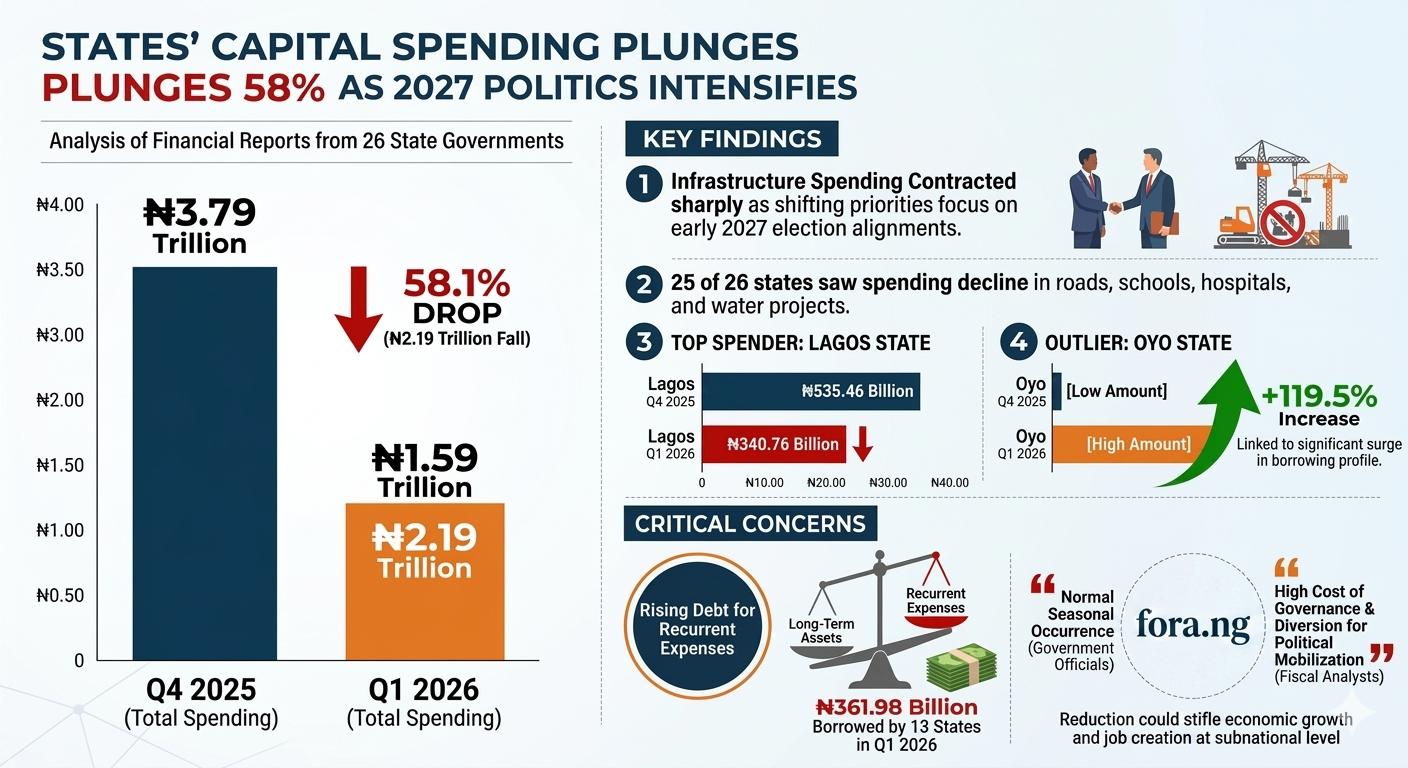
A new analysis of financial reports from 26 state govern ments shows a massive 58.1% drop in capital expenditure during the first quarter of 2026. Total spending on infrastructure projects fell by N2.19 trillion, dropping from N3.79 trillion in the final quarter of 2025 to just N1.59 trillion. Economic experts suggest that the sharp contraction is a result of shifting priorities as political actors focus on early alignments for the 2027 elections.
The data reveals that 25 out of the 26 states that published their reports saw a decline in spending on roads, schools, hospitals, and water projects. Lagos State remained the highest spender but still saw its capital outlay decrease from N535.46 billion to N340.76 billion. Oyo State was the lone exception, recording a 119.5% increase in spending, which analysts link to a significant surge in its borrowing profile.
Fiscal analysts have warned that the reduction in capital spending could stifle economic growth and job creation at the subnational level. There are growing concerns that state governments are increasingly relying on debt to finance recurrent expenses rather than long-term assets. In the first quarter of 2026 alone, 13 states borrowed a combined N361.98 billion despite the reduction in developmental projects.
The trend has sparked a debate over fiscal responsibility. While some government officials argue that the slowdown is a normal seasonal occurrence following end-of-year budget cycles, others point to the high cost of governance and the diversion of resources toward political mobilization as the primary causes for the infrastructure spending slump.
A new analysis of financial reports from 26 state governments shows a massive 58.1% drop in capital expenditure during the first quarter of 2026. Total spending on infrastructure projects fell by N2.19 trillion, dropping from N3.79 trillion in the final quarter of 2025 to just N1.59 trillion. Economic experts suggest that the sharp contraction is a result of shifting priorities as political actors focus on early alignments for the 2027 elections.
The data reveals that 25 out of the 26 states that published their reports saw a decline in spending on roads, schools, hospitals, and water projects. Lagos State remained the highest spender but still saw its capital outlay decrease from N535.46 billion to N340.76 billion. Oyo State was the lone exception, recording a 119.5% increase in spending, which analysts link to a significant surge in its borrowing profile.
Fiscal analysts have warned that the reduction in capital spending could stifle economic growth and job creation at the subnational level. There are growing concerns that state governments are increasingly relying on debt to finance recurrent expenses rather than long-term assets. In the first quarter of 2026 alone, 13 states borrowed a combined N361.98 billion despite the reduction in developmental projects.
The trend has sparked a debate over fiscal responsibility. While some government officials argue that the slowdown is a normal seasonal occurrence following end-of-year budget cycles, others point to the high cost of governance and the diversion of resources toward political mobilization as the primary causes for the infrastructure spending slump.
Uploaded files: