
Sky-High or Sky-Robbery? The Brutal Math Behind Nigeria’s Current Airfares

Quote from Doyin on May 1, 2026, 5:14 pm
The current surge in Nigerian airfares, with one-way domestic tickets hovering between ₦400,000 and ₦500,000 as of May 2026, presents a complex economic dilemma. To determine if these prices are justified, we must move beyond surface-level frustration and perform a granular analysis of the aviation industry’s cost structure.
From a purely accounting and survivalist perspective, the prices are largely a reflection of a brutal operational reality. However, from a systemic and regulatory perspective, there are clear “unjustified” distortions.
1. The Quantitative Reality: Breakdown of a Single Flight
To understand the pricing, we must look at the unit economics of a standard domestic leg (e.g., Lagos to Abuja) using a Boeing 737 or Airbus A220.
Cost Component Jan 2026 Benchmark May 2026 Current Variance Aviation Fuel (Jet A1) ~₦2.1M per flight ~₦7.6M – ₦13.8M +260% to +550% Exchange Rate (USD/NGN) ~₦1,400 ~₦1,930 +38% Taxes & Statutory Levies ~40% of ticket price ~45% of ticket price +5% Maintenance (C-Checks) Mostly Fixed (USD) 38% increase in NGN terms Correlated to FX Key Metric: For most domestic carriers, fuel now accounts for over 50% of total operating costs, up from the traditional 30-35%. At a landing price of ₦3,300 per liter in certain hubs (including logistics/storage), the “break-even” price for a 70% full flight has shifted significantly.
2. The “Justified” Arguments: Cost-Push Factors
The current price regime can be justified based on three primary macroeconomic “shocks”:
Fuel Price Explosion: The sharp increase in Jet A1 is an unprecedented crisis. While the Dangote Refinery provides local supply, middlemen and logistics bottlenecks have kept “at-the-pump” prices for airlines at global market parity or higher.
Recapitalization & Credit Crunch: Following the March 2026 banking recapitalization deadline, interest rates remain high. Airlines, which are capital-intensive and debt-heavy, are facing borrowing costs that necessitate higher margins just to service existing fleet financing.
Foreign Exchange Exposure: Over 90% of airline costs (spare parts, training, insurance, and engine overhauls) are denominated in US Dollars. With the Naira trading near ₦2,000/$, domestic revenues must be exponentially higher to cover these dollar-based liabilities.
3. The “Unjustified” Gaps: Market & Systemic Inefficiencies
There are, however, elements that suggest the current pricing is a symptom of a broken system rather than just “fair market value”:
Arbitrage and Middlemen: While the gantry price at refineries is approximately ₦1,800/liter, airlines are often forced to pay upwards of ₦2,500 – ₦3,300 due to intermediaries. This “distributive inefficiency” is an unjustified tax on the consumer.
Fiscal “Double-Dipping”: A significant portion of the ticket (roughly 45%) goes to government agencies (FAAN, NCAA, NAMA). Charging high passenger service fees while airport infrastructure—particularly cooling systems and baggage handling—remains sub-par is difficult to justify as “value for money.”
Lack of Scale: Nigeria has many small airlines instead of 2-3 massive “mega-carriers.” This prevents the industry from achieving the economies of scale (such as bulk fuel purchasing and in-house maintenance) that could lower seat costs.
4. Final Verdict: Justified or Not?
For the Individual Airline: Justified. Charging ₦100,000 for a ticket today is effectively a “subsidized loss” that would lead to bankruptcy within weeks given current fuel and FX rates.
For the National Economy: Unjustified. The current pricing has effectively “de-linked” the middle class from domestic mobility, forcing many back onto dangerous highways. This creates a massive negative externality for productivity and regional trade.
The Way Forward:
To stabilize prices, the focus must shift from “airline blaming” to structural intervention:
Direct Refiner-to-Airline Supply: Bypassing middlemen to ensure airlines get Jet A1 at refinery-gate prices.
Suspension of Non-Essential Levies: A temporary “holiday” on certain passenger charges to bring the tax component down from 45% to 20%.
Low-Interest Intervention Funds: Providing dedicated single-digit interest loans for aircraft maintenance to reduce the immediate pressure on cash flow.
As at today, Friday, May 1, 2026, the absolute “floor” for a one-way domestic flight ticket in Nigeria has shifted significantly. While the average fare for a standard, near-term booking (like Lagos to Abuja) is currently hovering around $237 (approximately ₦457,000), you can still find lower outliers if you look at “Saver” tiers.
Based on current market data for this morning:
The Absolute Lowest: Green Africa (gSaver) remains the price leader, with tickets starting from ₦190,325. However, these are “bare-bones” fares that do not include checked luggage and are typically non-refundable.
Budget Tier (ValueJet / Dana): These carriers are offering mid-week “Lite” tickets starting at approximately ₦225,000 to ₦260,000.
Premium Domestic (Air Peace / Ibom Air): For a flight booked today for travel within the next 48 hours, the lowest available fare is rarely below ₦380,000, with most “Economy” seats being sold at the ₦450,000+ mark.
Why the “Lowest” is still so high:
As discussed in the analysis, even these “lowest” fares are 250% higher than they were eighteen months ago. The reason you won’t see anything below ₦190,000 is the “Fuel Floor.” With Jet A1 fuel currently costing airlines over ₦3,000 per liter in many hubs, the variable cost of just taking off and landing has made the ₦100,000 ticket of 2025 a mathematical impossibility for an airline to sustain without going bankrupt.
Pro-Tip: If you are seeing fares listed on third-party sites for ₦100k–₦150k today, proceed with caution—these are often outdated caches or “ghost” fares that fail at the final payment gateway as the airline’s API updates to the May 2026 reality.
The Looming Crisis in Nigeria’s Aviation Sector
This video provides a recent debate between aviation experts and labor unions on whether current pricing models are predatory or purely reactionary to the 350% surge in fuel costs.
https://youtu.be/a70XVHil3gw
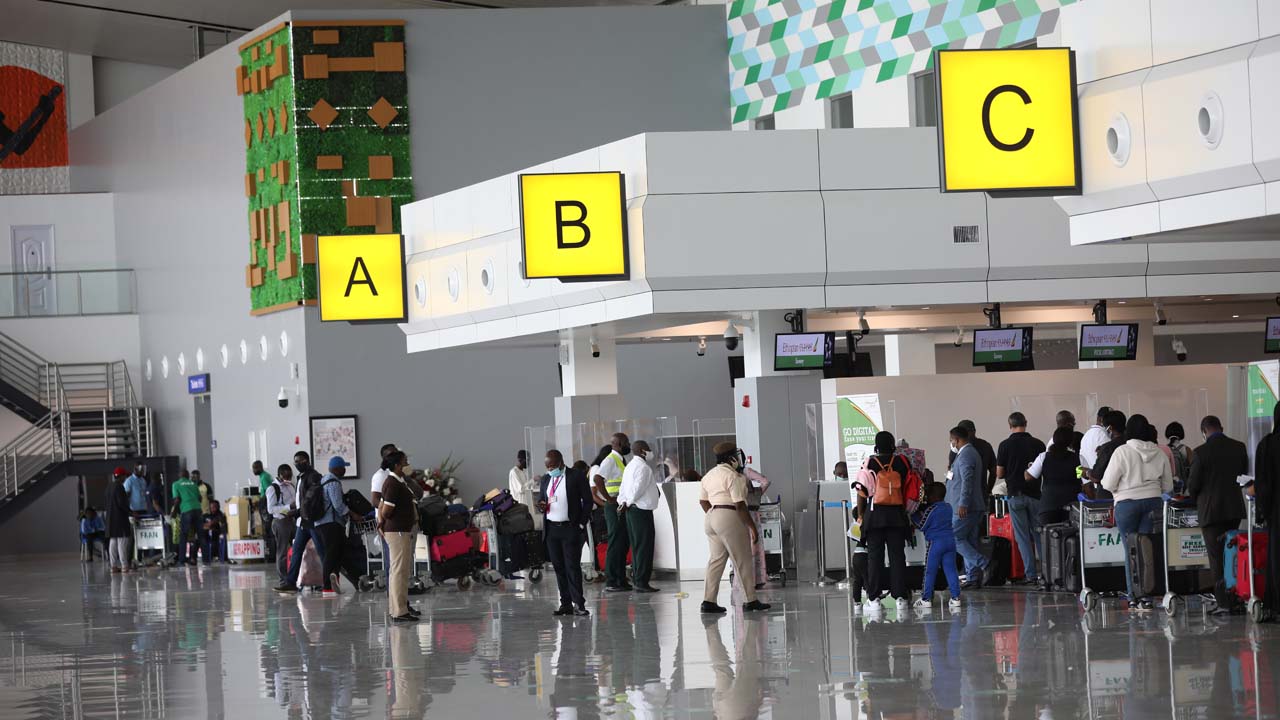
The current surge in Nigerian airfares, with one-way domestic tickets hovering between ₦400,000 and ₦500,000 as of May 2026, presents a complex economic dilemma. To determine if these prices are justified, we must move beyond surface-level frustration and perform a granular analysis of the aviation industry’s cost structure.
From a purely accounting and survivalist perspective, the prices are largely a reflection of a brutal operational reality. However, from a systemic and regulatory perspective, there are clear “unjustified” distortions.
1. The Quantitative Reality: Breakdown of a Single Flight
To understand the pricing, we must look at the unit economics of a standard domestic leg (e.g., Lagos to Abuja) using a Boeing 737 or Airbus A220.
| Cost Component | Jan 2026 Benchmark | May 2026 Current | Variance |
| Aviation Fuel (Jet A1) | ~₦2.1M per flight | ~₦7.6M – ₦13.8M | +260% to +550% |
| Exchange Rate (USD/NGN) | ~₦1,400 | ~₦1,930 | +38% |
| Taxes & Statutory Levies | ~40% of ticket price | ~45% of ticket price | +5% |
| Maintenance (C-Checks) | Mostly Fixed (USD) | 38% increase in NGN terms | Correlated to FX |
Key Metric: For most domestic carriers, fuel now accounts for over 50% of total operating costs, up from the traditional 30-35%. At a landing price of ₦3,300 per liter in certain hubs (including logistics/storage), the “break-even” price for a 70% full flight has shifted significantly.
2. The “Justified” Arguments: Cost-Push Factors
The current price regime can be justified based on three primary macroeconomic “shocks”:
-
Fuel Price Explosion: The sharp increase in Jet A1 is an unprecedented crisis. While the Dangote Refinery provides local supply, middlemen and logistics bottlenecks have kept “at-the-pump” prices for airlines at global market parity or higher.
-
Recapitalization & Credit Crunch: Following the March 2026 banking recapitalization deadline, interest rates remain high. Airlines, which are capital-intensive and debt-heavy, are facing borrowing costs that necessitate higher margins just to service existing fleet financing.
-
Foreign Exchange Exposure: Over 90% of airline costs (spare parts, training, insurance, and engine overhauls) are denominated in US Dollars. With the Naira trading near ₦2,000/$, domestic revenues must be exponentially higher to cover these dollar-based liabilities.
3. The “Unjustified” Gaps: Market & Systemic Inefficiencies
There are, however, elements that suggest the current pricing is a symptom of a broken system rather than just “fair market value”:
-
Arbitrage and Middlemen: While the gantry price at refineries is approximately ₦1,800/liter, airlines are often forced to pay upwards of ₦2,500 – ₦3,300 due to intermediaries. This “distributive inefficiency” is an unjustified tax on the consumer.
-
Fiscal “Double-Dipping”: A significant portion of the ticket (roughly 45%) goes to government agencies (FAAN, NCAA, NAMA). Charging high passenger service fees while airport infrastructure—particularly cooling systems and baggage handling—remains sub-par is difficult to justify as “value for money.”
-
Lack of Scale: Nigeria has many small airlines instead of 2-3 massive “mega-carriers.” This prevents the industry from achieving the economies of scale (such as bulk fuel purchasing and in-house maintenance) that could lower seat costs.
4. Final Verdict: Justified or Not?
-
For the Individual Airline: Justified. Charging ₦100,000 for a ticket today is effectively a “subsidized loss” that would lead to bankruptcy within weeks given current fuel and FX rates.
-
For the National Economy: Unjustified. The current pricing has effectively “de-linked” the middle class from domestic mobility, forcing many back onto dangerous highways. This creates a massive negative externality for productivity and regional trade.
The Way Forward:
To stabilize prices, the focus must shift from “airline blaming” to structural intervention:
-
Direct Refiner-to-Airline Supply: Bypassing middlemen to ensure airlines get Jet A1 at refinery-gate prices.
-
Suspension of Non-Essential Levies: A temporary “holiday” on certain passenger charges to bring the tax component down from 45% to 20%.
-
Low-Interest Intervention Funds: Providing dedicated single-digit interest loans for aircraft maintenance to reduce the immediate pressure on cash flow.
As at today, Friday, May 1, 2026, the absolute “floor” for a one-way domestic flight ticket in Nigeria has shifted significantly. While the average fare for a standard, near-term booking (like Lagos to Abuja) is currently hovering around $237 (approximately ₦457,000), you can still find lower outliers if you look at “Saver” tiers.
Based on current market data for this morning:
-
The Absolute Lowest: Green Africa (gSaver) remains the price leader, with tickets starting from ₦190,325. However, these are “bare-bones” fares that do not include checked luggage and are typically non-refundable.
-
Budget Tier (ValueJet / Dana): These carriers are offering mid-week “Lite” tickets starting at approximately ₦225,000 to ₦260,000.
-
Premium Domestic (Air Peace / Ibom Air): For a flight booked today for travel within the next 48 hours, the lowest available fare is rarely below ₦380,000, with most “Economy” seats being sold at the ₦450,000+ mark.
Why the “Lowest” is still so high:
As discussed in the analysis, even these “lowest” fares are 250% higher than they were eighteen months ago. The reason you won’t see anything below ₦190,000 is the “Fuel Floor.” With Jet A1 fuel currently costing airlines over ₦3,000 per liter in many hubs, the variable cost of just taking off and landing has made the ₦100,000 ticket of 2025 a mathematical impossibility for an airline to sustain without going bankrupt.
Pro-Tip: If you are seeing fares listed on third-party sites for ₦100k–₦150k today, proceed with caution—these are often outdated caches or “ghost” fares that fail at the final payment gateway as the airline’s API updates to the May 2026 reality.
-
The Looming Crisis in Nigeria’s Aviation Sector
This video provides a recent debate between aviation experts and labor unions on whether current pricing models are predatory or purely reactionary to the 350% surge in fuel costs.

Quote from Chukwuma_U on May 12, 2026, 5:20 pmThis is a very valid point. Nigeria needs this conversation.
This is a very valid point. Nigeria needs this conversation.

Headlines:
Latest Forum Topics
- Unilorin Medical Mess as a Metaphor
- US government released the identities of five notorious Nigerian cyber fraudsters (Yahoo boys)
- Glimpses From The Oyo Rescue Operation
- Enugu Rangers Denies Simon’s Discrimination Claim
- Most popular beaches in Lagos and cost of access
- Abuja Hospital Offers LASER Prostate Treatment With no Surgical Cuts
- How Oyo pupils, teachers were freed without ransom – Ex-DSS operative
- Kidnapped Oyo State Students and Teachers Rescued Alive!
- Airtel Recruitment
- 43 Institutions Involved In NELFUND Double Tuition Scandal -NANS
- Senate Kills Motion Seeking Probe Into Controversial N1.3 Billion PFIPC 2026 Budget
- China Court Sentiences Government Official To Death For Collecting Bribes
- El-Rufai abused medical visit, doctor arrested – ICPC
- Three Nigerian students win gold medals at the STEM Olympiad
- Yahoo Boy Narrates How He Killed A Young Woman For Ritual Purposes
- Plenty Girls Are Going Into Relationship Because Of What They\'ll Eat – Emeka Ike
- Fake Agency ‘DG’ Adeyemi Outsmarted Federal Officials To Secure CBN Accounts
- Two African teams qualify for World Cup Round of 16, eight eliminated
- Lithium Processing Plant In Nasarawa State
- Who smuggled N1.3bn into PFIPC budget?