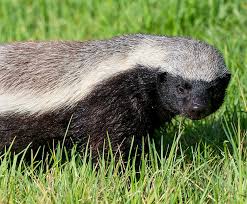
In the vast wilderness of Africa and Asia lives a creature that has earned a reputation so formidable it has become the stuff of legend. While it bears the sweet-sounding name “Honey Badger,” its traditional name, the Ratel, much better captures its essence. Derived from the Dutch word for “rattle,” referring to the sound it makes when excited or angry, the Ratel is arguably the most dangerous pound-for-pound animal on the planet.
Don’t let its relatively small size—about 30 centimeters at the shoulder—fool you. The Guinness Book of World Records officially lists the Ratel as the “Most Fearless Animal in the World.” Here is a breakdown of what makes this “black-and-white blur” so incredibly dangerous.
1. The Armor You Can’t Penetrate
The Ratel’s primary defense is its skin, which is a biological marvel. It is nearly 6 millimeters thick—tougher than a buffalo’s hide—making it almost impervious to bee stings, porcupine quills, and even the teeth of large predators.
-
The “Loose-Fit” Advantage: Its skin is not just thick; it is incredibly loose. If a predator like a lion or leopard manages to grab a Ratel by the scruff of its neck, the Ratel can literally turn around inside its own skin to deliver a devastating bite to the attacker’s face or eyes.
-
Machete-Resistant: Legend has it that the Ratel’s skin is so tough it can withstand several blows from a machete, which has made it a symbol of resilience in many cultures.
2. Immunity to Death
The Ratel has a diet that would kill almost any other mammal. It is a specialized hunter of venomous snakes, including cobras and puff adders.
-
Venom Resistance: Over millions of years, the Ratel has developed a biological immunity to many types of snake venom. If bitten by a lethal cobra, the Ratel might pass out for a few hours, appearing dead. However, its body eventually neutralizes the toxins, and the animal simply wakes up and finishes its meal.
-
Fearless Appetite: It views scorpions and vipers not as threats, but as high-protein snacks.
3. Psychological Warfare and Aggression
Perhaps the most dangerous aspect of the Ratel is its temperament. Most animals in the wild operate on a “flight or fight” instinct; the Ratel almost exclusively chooses “fight.”
-
Staring Down Lions: There is documented footage of solitary Ratels charging at prides of lions or packs of hyenas. Because the Ratel is so aggressive and difficult to kill, many apex predators simply decide that the energy required to hunt one isn’t worth the risk of being severely bitten or clawed.
-
The “Groin” Tactic: In one of the more gruesome entries of wildlife lore, the Ratel is known for a specific combat tactic when facing larger mammals: it targets the soft tissue of the groin. This “castration” strategy is enough to make even the most dominant male lion back away in a hurry.
4. The “Stink Bomb”
If its teeth and claws aren’t enough to end a confrontation, the Ratel has one last trick. Like its relative the skunk, it possesses an anal scent gland. When threatened, it can release a suffocating odor that is so potent it can stun a hive of bees or drive a predator out of its territory.
Comparison: Ratel vs. Standard Predators
| Feature |
Ratel |
Most Medium Predators |
| Skin |
6mm thick / Loose-fitting |
Thin / Tight-fitting |
| Venom |
Immune to many neurotoxins |
Lethal |
| Philosophy |
Total aggression / Fearless |
Risk-averse / Cautious |
| Diet |
Generalist (Snakes, Honey, Carrion) |
Specialist |
Conclusion
The Ratel is a masterclass in survival through pure, unadulterated grit. It is a reminder that in nature, size is often secondary to attitude. Whether it is shrugging off a cobra bite or chasing a leopard away from a kill, the Ratel has earned its place as the ultimate survivor.
If you ever find yourself in the African savanna and spot a low-slung, black-and-white creature trotting toward you—give it the right of way. As the saying goes: The Ratel doesn’t care.
In the vast wilderness of Africa and Asia lives a creature that has earned a reputation so formidable it has become the stuff of legend. While it bears the sweet-sounding name “Honey Badger,” its traditional name, the Ratel, much better captures its essence. Derived from the Dutch word for “rattle,” referring to the sound it makes when excited or angry, the Ratel is arguably the most dangerous pound-for-pound animal on the planet.
Don’t let its relatively small size—about 30 centimeters at the shoulder—fool you. The Guinness Book of World Records officially lists the Ratel as the “Most Fearless Animal in the World.” Here is a breakdown of what makes this “black-and-white blur” so incredibly dangerous.
1. The Armor You Can’t Penetrate
The Ratel’s primary defense is its skin, which is a biological marvel. It is nearly 6 millimeters thick—tougher than a buffalo’s hide—making it almost impervious to bee stings, porcupine quills, and even the teeth of large predators.
-
The “Loose-Fit” Advantage: Its skin is not just thick; it is incredibly loose. If a predator like a lion or leopard manages to grab a Ratel by the scruff of its neck, the Ratel can literally turn around inside its own skin to deliver a devastating bite to the attacker’s face or eyes.
-
Machete-Resistant: Legend has it that the Ratel’s skin is so tough it can withstand several blows from a machete, which has made it a symbol of resilience in many cultures.
2. Immunity to Death
The Ratel has a diet that would kill almost any other mammal. It is a specialized hunter of venomous snakes, including cobras and puff adders.
-
Venom Resistance: Over millions of years, the Ratel has developed a biological immunity to many types of snake venom. If bitten by a lethal cobra, the Ratel might pass out for a few hours, appearing dead. However, its body eventually neutralizes the toxins, and the animal simply wakes up and finishes its meal.
-
Fearless Appetite: It views scorpions and vipers not as threats, but as high-protein snacks.
3. Psychological Warfare and Aggression
Perhaps the most dangerous aspect of the Ratel is its temperament. Most animals in the wild operate on a “flight or fight” instinct; the Ratel almost exclusively chooses “fight.”
-
Staring Down Lions: There is documented footage of solitary Ratels charging at prides of lions or packs of hyenas. Because the Ratel is so aggressive and difficult to kill, many apex predators simply decide that the energy required to hunt one isn’t worth the risk of being severely bitten or clawed.
-
The “Groin” Tactic: In one of the more gruesome entries of wildlife lore, the Ratel is known for a specific combat tactic when facing larger mammals: it targets the soft tissue of the groin. This “castration” strategy is enough to make even the most dominant male lion back away in a hurry.
4. The “Stink Bomb”
If its teeth and claws aren’t enough to end a confrontation, the Ratel has one last trick. Like its relative the skunk, it possesses an anal scent gland. When threatened, it can release a suffocating odor that is so potent it can stun a hive of bees or drive a predator out of its territory.
Comparison: Ratel vs. Standard Predators
| Feature |
Ratel |
Most Medium Predators |
| Skin |
6mm thick / Loose-fitting |
Thin / Tight-fitting |
| Venom |
Immune to many neurotoxins |
Lethal |
| Philosophy |
Total aggression / Fearless |
Risk-averse / Cautious |
| Diet |
Generalist (Snakes, Honey, Carrion) |
Specialist |
Conclusion
The Ratel is a masterclass in survival through pure, unadulterated grit. It is a reminder that in nature, size is often secondary to attitude. Whether it is shrugging off a cobra bite or chasing a leopard away from a kill, the Ratel has earned its place as the ultimate survivor.
If you ever find yourself in the African savanna and spot a low-slung, black-and-white creature trotting toward you—give it the right of way. As the saying goes: The Ratel doesn’t care.