
How Nigerians Voted For Tinubu, Atiku,Obi and Kwankwaso in 2023

Quote from admin on May 5, 2026, 11:05 am
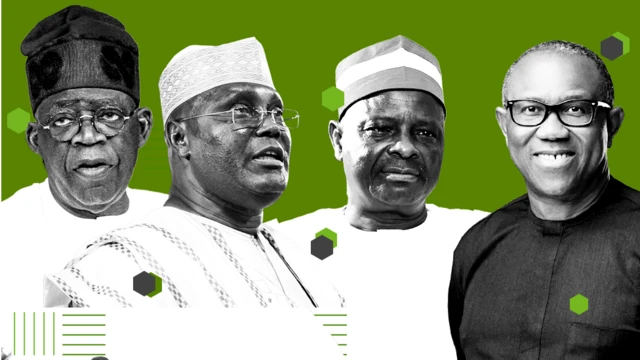
The 2023 Presidential Election was historic for the way it fragmented the Nigerian electorate across geopolitical lines. Below is the full state-by-state breakdown of the official votes cast for the four major candidates.
2023 Presidential Election: Official State-by-State Results
Geopolitical Zone State Tinubu (APC) Atiku (PDP) Obi (LP) Kwankwaso (NNPP) North West Kano 517,341 131,716 28,513 997,279 Kaduna 399,293 554,360 294,494 92,969 Katsina 482,283 489,045 6,376 69,386 Jigawa 421,390 386,587 1,889 98,172 Kebbi 248,088 285,175 10,682 5,038 Sokoto 285,444 289,520 6,568 1,300 Zamfara 298,396 193,298 1,611 4,044 North East Bauchi 316,694 426,607 27,373 72,103 Adamawa 182,881 417,611 105,648 8,006 Borno 252,282 190,921 7,205 4,626 Gombe 146,977 319,123 26,160 10,520 Taraba 135,165 189,017 146,315 12,818 Yobe 151,459 198,567 2,406 18,270 North Central Benue 310,468 130,081 308,372 4,740 Kwara 263,572 136,909 31,166 3,141 Niger 375,183 284,898 80,452 21,836 Kogi 240,751 145,104 56,217 4,238 Plateau 307,195 243,808 466,272 8,869 Nasarawa 172,922 147,093 191,361 12,715 FCT 90,902 74,199 281,717 4,517 South West Lagos 572,606 75,750 582,454 8,442 Oyo 449,884 182,977 99,393 4,068 Ogun 341,554 123,831 85,829 2,204 Ondo 369,924 115,463 47,350 930 Osun 343,945 354,366 23,283 713 Ekiti 201,494 89,554 11,397 264 South East Anambra 5,111 9,036 584,621 1,967 Enugu 4,772 15,749 428,640 1,608 Imo 66,171 30,044 352,904 1,536 Abia 8,914 22,676 327,095 1,151 Ebonyi 42,402 13,503 259,738 512 South South Rivers 231,571 88,468 175,071 1,322 Delta 90,183 161,600 341,866 3,122 Akwa Ibom 160,143 214,012 132,683 7,796 Edo 144,471 89,585 331,163 2,732 Cross River 130,520 95,425 179,917 1,651 Bayelsa 42,572 68,818 49,975 540 NATIONAL TOTALS 8,794,726 6,984,520 6,101,533 1,496,687 💥 Flash drop! Temu codes are here. Don’t Miss Out! 🎉
【 alj218004 】GO WILD WITH ₦0 GIFTS! Freebies are flying off the shelves — grab yours before they’re gone 👉https://temu.to/k/ekgnbt5h9xkQuick Analytic Takeaways
Tinubu (APC): Won 12 states. His victory was anchored in the South West (winning 5 of 6 states) and a strong showing across the North West and North Central.
Atiku (PDP): Won 12 states. His strength was highest in the North East and North West. He struggled in the South, only winning Akwa Ibom and Bayelsa.
Obi (LP): Won 11 states and the FCT. He achieved a near-total sweep of the South East and South South and made history by winning Lagos, the FCT, and Plateau.
Kwankwaso (NNPP): Won 1 state (Kano). While he polled over 1.4 million votes, his influence remained highly localized to the Kano axis.
The Swing States
The “swing” effect in 2023 was driven by three specific states that broke decades of political tradition. These states didn’t just provide votes; they fundamentally shifted the national math for the major candidates.
1. Lagos State: The “Heartland” Upset
Lagos was the most significant swing of the election. For the first time since 1999, the “owner” of Lagos politics (Tinubu) lost his home state.
The Swing: Peter Obi defeated Tinubu by ~10,000 votes in a state that was considered the APC’s impregnable fortress.
The Impact: This result was a massive psychological blow to the APC and a signal of the “Third Force” (LP) strength. However, because the margin was so small, it didn’t “drain” Tinubu’s national lead—it simply denied him the 1-million-vote surplus he usually counts on from Lagos.
2. Kano State: The “Spoilers” Fortress
Kano is Nigeria’s largest voting bloc. Historically, it is a two-way battle between APC and PDP. In 2023, Rabiu Kwankwaso (NNPP) turned it into a “one-candidate” state.
The Swing: Kwankwaso took 997,279 votes, leaving the APC and PDP with relatively small remnants.
The Impact: This was the decisive swing for Atiku Abubakar. In 2019, the PDP got over 390,000 votes in Kano. In 2023, they dropped to just 131,716. Kwankwaso effectively “locked” the North West’s largest vote bank, preventing Atiku from gaining the Northern momentum he needed to overtake Tinubu.
3. Plateau State: The Middle Belt Realignment
Plateau has traditionally been a PDP stronghold or a battleground. In 2023, it swung violently toward the Labour Party.
The Swing: Peter Obi polled 466,272 votes, more than doubling the combined votes of Tinubu and Atiku.
The Impact: This swing proved that the “Obidient” movement wasn’t just a Southern phenomenon. By winning Plateau and Nasarawa, Obi created a “Middle Belt Buffer” that prevented the APC from sweeping the North Central, which historically helped solidify the winner’s mandate.
State 2019 Pattern 2023 Swing Winner Margin/Context Lagos APC Stronghold Peter Obi (LP) Won by ~10k votes; first loss for Tinubu’s camp. Kano APC/PDP Battle Kwankwaso (NNPP) Won with 58% of the vote; neutralized APC/PDP. Plateau PDP Stronghold Peter Obi (LP) Won by over 150k votes over the runner-up. 💥 Flash drop! Temu codes are here. Don’t Miss Out! 🎉
【 alj218004 】GO WILD WITH ₦0 GIFTS! Freebies are flying off the shelves — grab yours before they’re gone 👉https://temu.to/k/ekgnbt5h9xkThe “Un-Swung” State: Rivers
While Lagos and Kano swung away from the status quo, Rivers State performed a controversial “reverse swing.”
In 2019, Rivers gave the PDP 473,000 votes.
In 2023, despite Peter Obi’s massive popularity in the streets of Port Harcourt, the official results gave Tinubu (APC) the win with 231,571 votes.
Analytic Note: Many observers cite Rivers as the state that most significantly impacted the national total by swinging from the PDP base to the APC, rather than to the LP as expected.
Based on the official data from the 2023 Presidential Election, here are the total summed votes specifically for the 19 Northern states and the Federal Capital Territory (FCT).
This total represents the collective strength of each candidate across the North West, North East, and North Central zones.
Northern Nigeria Comprehensive Totals (2023) Candidate North West North East North Central/FCT Total Northern Vote % of Northern Vote Atiku Abubakar (PDP) 2,329,801 2,161,813 1,164,202 5,655,816 38.08% Bola Tinubu (APC) 2,652,235 1,185,458 1,760,993 5,598,686 37.69% Peter Obi (LP) 358,241 275,012 1,414,376 2,047,629 13.79% R. Kwankwaso (NNPP) 1,366,181 124,593 60,456 1,551,230 10.44% TOTAL 6,706,458 3,746,876 4,400,027 14,853,361 100.00% Quick Analysis of the Summed Totals
The Narrowest Margin: When you sum up the entire North, Atiku Abubakar won the region by a mere 57,130 votes over Bola Tinubu. In a region that cast nearly 15 million valid votes for these four candidates, this margin is incredibly slim (0.39%).
The “Disruptor” Impact: The combined votes of Peter Obi and Rabiu Kwankwaso in the North total 3,598,859. This confirms that the two “third-party” candidates successfully broke the traditional binary hold of the APC and PDP in the North, capturing over 24% of the total Northern vote.
Regional Strongholds:
Atiku dominated the total count due to his massive surplus in the North East.
Tinubu stayed neck-and-neck with Atiku by winning the total popular vote in the North West.
Obi secured his 2 million-plus Northern votes primarily from the North Central (Middle Belt).
Kwankwaso derived the vast majority of his total Northern strength from Kano State alone.
This final comparison illustrates why the North remains the political powerhouse of Nigeria. While the South holds a significant number of registered voters, the North consistently translates its register into actual ballots at a much higher rate.
Here is the analytical breakdown of Registered Voters versus Actual Voter Turnout for the North and South.
National Registration vs. Turnout (2023)
Region Registered Voters Actual Votes Cast (Approx) Turnout Rate (%) The North (19 States + FCT) 50,478,429 15,361,677 30.4% The South (17 States) 42,990,579 9,603,541 22.3% NATIONAL TOTAL 93,469,008 24,965,218 26.7%
Comparative Analytics
1. The “Participation Gap”
The North has approximately 7.5 million more registered voters than the South and also produced nearly 5.8 million more actual votes. This means the North’s influence on the final result was disproportionately larger than its population lead. For every 10 people who registered in the North, 3 voted; in the South, only about 2 out of 10 made it to the finish line.
2. Regional Performance Highs and Lows
The Northern Standard: The North West (31.4%) and North Central (30.5%) were the only zones in the country to cross the 30% threshold. This collective consistency across 19 states created a massive “vote bank” that was difficult for Southern-based candidates to overcome.
The Southern Slump: The South South recorded the lowest turnout in Nigeria at 18.2%, despite having a very high registration of over 14 million. If the South South had matched the North West’s turnout rate (31.4%), it would have produced an additional 1.9 million votes, which could have drastically shifted the national rankings.
3. The Demographic Paradox
The South West (home to Lagos) has the second-highest number of registered voters in Nigeria (~18 million), yet it produced fewer actual votes (4.0 million) than the North Central (4.8 million), which has nearly 3 million fewer people on its register.
Summary of Influence
The North: Effectively decided the presidency by maintaining a higher “turnout floor.” The competition between Atiku and Tinubu for these high-engagement voters was the most critical part of the 2023 race.
The South: While the South showed intense interest (especially with the “Obidient” movement), logistical delays, voter suppression reports, and historical apathy in major urban centers like Lagos and Port Harcourt kept the actual impact of the Southern register far below its potential.
These analytic data suggests that for any party to win in the future, they must either crack the North’s high-turnout machinery or find a way to fix the logistical and apathy issues that keep Southern turnout in the low 20s.
💥 Flash drop! Temu codes are here. Don’t Miss Out! 🎉
【 alj218004 】GO WILD WITH ₦0 GIFTS! Freebies are flying off the shelves — grab yours before they’re gone 👉https://temu.to/k/ekgnbt5h9xk
The 2023 Presidential Election was historic for the way it fragmented the Nigerian electorate across geopolitical lines. Below is the full state-by-state breakdown of the official votes cast for the four major candidates.
2023 Presidential Election: Official State-by-State Results
| Geopolitical Zone | State | Tinubu (APC) | Atiku (PDP) | Obi (LP) | Kwankwaso (NNPP) |
| North West | Kano | 517,341 | 131,716 | 28,513 | 997,279 |
| Kaduna | 399,293 | 554,360 | 294,494 | 92,969 | |
| Katsina | 482,283 | 489,045 | 6,376 | 69,386 | |
| Jigawa | 421,390 | 386,587 | 1,889 | 98,172 | |
| Kebbi | 248,088 | 285,175 | 10,682 | 5,038 | |
| Sokoto | 285,444 | 289,520 | 6,568 | 1,300 | |
| Zamfara | 298,396 | 193,298 | 1,611 | 4,044 | |
| North East | Bauchi | 316,694 | 426,607 | 27,373 | 72,103 |
| Adamawa | 182,881 | 417,611 | 105,648 | 8,006 | |
| Borno | 252,282 | 190,921 | 7,205 | 4,626 | |
| Gombe | 146,977 | 319,123 | 26,160 | 10,520 | |
| Taraba | 135,165 | 189,017 | 146,315 | 12,818 | |
| Yobe | 151,459 | 198,567 | 2,406 | 18,270 | |
| North Central | Benue | 310,468 | 130,081 | 308,372 | 4,740 |
| Kwara | 263,572 | 136,909 | 31,166 | 3,141 | |
| Niger | 375,183 | 284,898 | 80,452 | 21,836 | |
| Kogi | 240,751 | 145,104 | 56,217 | 4,238 | |
| Plateau | 307,195 | 243,808 | 466,272 | 8,869 | |
| Nasarawa | 172,922 | 147,093 | 191,361 | 12,715 | |
| FCT | 90,902 | 74,199 | 281,717 | 4,517 | |
| South West | Lagos | 572,606 | 75,750 | 582,454 | 8,442 |
| Oyo | 449,884 | 182,977 | 99,393 | 4,068 | |
| Ogun | 341,554 | 123,831 | 85,829 | 2,204 | |
| Ondo | 369,924 | 115,463 | 47,350 | 930 | |
| Osun | 343,945 | 354,366 | 23,283 | 713 | |
| Ekiti | 201,494 | 89,554 | 11,397 | 264 | |
| South East | Anambra | 5,111 | 9,036 | 584,621 | 1,967 |
| Enugu | 4,772 | 15,749 | 428,640 | 1,608 | |
| Imo | 66,171 | 30,044 | 352,904 | 1,536 | |
| Abia | 8,914 | 22,676 | 327,095 | 1,151 | |
| Ebonyi | 42,402 | 13,503 | 259,738 | 512 | |
| South South | Rivers | 231,571 | 88,468 | 175,071 | 1,322 |
| Delta | 90,183 | 161,600 | 341,866 | 3,122 | |
| Akwa Ibom | 160,143 | 214,012 | 132,683 | 7,796 | |
| Edo | 144,471 | 89,585 | 331,163 | 2,732 | |
| Cross River | 130,520 | 95,425 | 179,917 | 1,651 | |
| Bayelsa | 42,572 | 68,818 | 49,975 | 540 | |
| NATIONAL TOTALS | 8,794,726 | 6,984,520 | 6,101,533 | 1,496,687 |
💥 Flash drop! Temu codes are here. Don’t Miss Out! 🎉
【 alj218004 】GO WILD WITH ₦0 GIFTS! Freebies are flying off the shelves — grab yours before they’re gone 👉https://temu.to/k/ekgnbt5h9xk
Quick Analytic Takeaways
-
Tinubu (APC): Won 12 states. His victory was anchored in the South West (winning 5 of 6 states) and a strong showing across the North West and North Central.
-
Atiku (PDP): Won 12 states. His strength was highest in the North East and North West. He struggled in the South, only winning Akwa Ibom and Bayelsa.
-
Obi (LP): Won 11 states and the FCT. He achieved a near-total sweep of the South East and South South and made history by winning Lagos, the FCT, and Plateau.
-
Kwankwaso (NNPP): Won 1 state (Kano). While he polled over 1.4 million votes, his influence remained highly localized to the Kano axis.
The Swing States
The “swing” effect in 2023 was driven by three specific states that broke decades of political tradition. These states didn’t just provide votes; they fundamentally shifted the national math for the major candidates.
1. Lagos State: The “Heartland” Upset
Lagos was the most significant swing of the election. For the first time since 1999, the “owner” of Lagos politics (Tinubu) lost his home state.
-
The Swing: Peter Obi defeated Tinubu by ~10,000 votes in a state that was considered the APC’s impregnable fortress.
-
The Impact: This result was a massive psychological blow to the APC and a signal of the “Third Force” (LP) strength. However, because the margin was so small, it didn’t “drain” Tinubu’s national lead—it simply denied him the 1-million-vote surplus he usually counts on from Lagos.
2. Kano State: The “Spoilers” Fortress
Kano is Nigeria’s largest voting bloc. Historically, it is a two-way battle between APC and PDP. In 2023, Rabiu Kwankwaso (NNPP) turned it into a “one-candidate” state.
-
The Swing: Kwankwaso took 997,279 votes, leaving the APC and PDP with relatively small remnants.
-
The Impact: This was the decisive swing for Atiku Abubakar. In 2019, the PDP got over 390,000 votes in Kano. In 2023, they dropped to just 131,716. Kwankwaso effectively “locked” the North West’s largest vote bank, preventing Atiku from gaining the Northern momentum he needed to overtake Tinubu.
3. Plateau State: The Middle Belt Realignment
Plateau has traditionally been a PDP stronghold or a battleground. In 2023, it swung violently toward the Labour Party.
-
The Swing: Peter Obi polled 466,272 votes, more than doubling the combined votes of Tinubu and Atiku.
-
The Impact: This swing proved that the “Obidient” movement wasn’t just a Southern phenomenon. By winning Plateau and Nasarawa, Obi created a “Middle Belt Buffer” that prevented the APC from sweeping the North Central, which historically helped solidify the winner’s mandate.
| State | 2019 Pattern | 2023 Swing Winner | Margin/Context |
| Lagos | APC Stronghold | Peter Obi (LP) | Won by ~10k votes; first loss for Tinubu’s camp. |
| Kano | APC/PDP Battle | Kwankwaso (NNPP) | Won with 58% of the vote; neutralized APC/PDP. |
| Plateau | PDP Stronghold | Peter Obi (LP) | Won by over 150k votes over the runner-up. |
💥 Flash drop! Temu codes are here. Don’t Miss Out! 🎉
【 alj218004 】GO WILD WITH ₦0 GIFTS! Freebies are flying off the shelves — grab yours before they’re gone 👉https://temu.to/k/ekgnbt5h9xk
The “Un-Swung” State: Rivers
While Lagos and Kano swung away from the status quo, Rivers State performed a controversial “reverse swing.”
-
In 2019, Rivers gave the PDP 473,000 votes.
-
In 2023, despite Peter Obi’s massive popularity in the streets of Port Harcourt, the official results gave Tinubu (APC) the win with 231,571 votes.
-
Analytic Note: Many observers cite Rivers as the state that most significantly impacted the national total by swinging from the PDP base to the APC, rather than to the LP as expected.
Based on the official data from the 2023 Presidential Election, here are the total summed votes specifically for the 19 Northern states and the Federal Capital Territory (FCT).
This total represents the collective strength of each candidate across the North West, North East, and North Central zones.
| Northern Nigeria Comprehensive Totals (2023) | |||||
| Candidate | North West | North East | North Central/FCT | Total Northern Vote | % of Northern Vote |
| Atiku Abubakar (PDP) | 2,329,801 | 2,161,813 | 1,164,202 | 5,655,816 | 38.08% |
| Bola Tinubu (APC) | 2,652,235 | 1,185,458 | 1,760,993 | 5,598,686 | 37.69% |
| Peter Obi (LP) | 358,241 | 275,012 | 1,414,376 | 2,047,629 | 13.79% |
| R. Kwankwaso (NNPP) | 1,366,181 | 124,593 | 60,456 | 1,551,230 | 10.44% |
| TOTAL | 6,706,458 | 3,746,876 | 4,400,027 | 14,853,361 | 100.00% |
Quick Analysis of the Summed Totals
-
The Narrowest Margin: When you sum up the entire North, Atiku Abubakar won the region by a mere 57,130 votes over Bola Tinubu. In a region that cast nearly 15 million valid votes for these four candidates, this margin is incredibly slim (0.39%).
-
The “Disruptor” Impact: The combined votes of Peter Obi and Rabiu Kwankwaso in the North total 3,598,859. This confirms that the two “third-party” candidates successfully broke the traditional binary hold of the APC and PDP in the North, capturing over 24% of the total Northern vote.
-
Regional Strongholds:
-
Atiku dominated the total count due to his massive surplus in the North East.
-
Tinubu stayed neck-and-neck with Atiku by winning the total popular vote in the North West.
-
Obi secured his 2 million-plus Northern votes primarily from the North Central (Middle Belt).
-
Kwankwaso derived the vast majority of his total Northern strength from Kano State alone.
-
This final comparison illustrates why the North remains the political powerhouse of Nigeria. While the South holds a significant number of registered voters, the North consistently translates its register into actual ballots at a much higher rate.
Here is the analytical breakdown of Registered Voters versus Actual Voter Turnout for the North and South.
National Registration vs. Turnout (2023)
| Region | Registered Voters | Actual Votes Cast (Approx) | Turnout Rate (%) |
| The North (19 States + FCT) | 50,478,429 | 15,361,677 | 30.4% |
| The South (17 States) | 42,990,579 | 9,603,541 | 22.3% |
| NATIONAL TOTAL | 93,469,008 | 24,965,218 | 26.7% |
Comparative Analytics
1. The “Participation Gap”
The North has approximately 7.5 million more registered voters than the South and also produced nearly 5.8 million more actual votes. This means the North’s influence on the final result was disproportionately larger than its population lead. For every 10 people who registered in the North, 3 voted; in the South, only about 2 out of 10 made it to the finish line.
2. Regional Performance Highs and Lows
-
The Northern Standard: The North West (31.4%) and North Central (30.5%) were the only zones in the country to cross the 30% threshold. This collective consistency across 19 states created a massive “vote bank” that was difficult for Southern-based candidates to overcome.
-
The Southern Slump: The South South recorded the lowest turnout in Nigeria at 18.2%, despite having a very high registration of over 14 million. If the South South had matched the North West’s turnout rate (31.4%), it would have produced an additional 1.9 million votes, which could have drastically shifted the national rankings.
3. The Demographic Paradox
The South West (home to Lagos) has the second-highest number of registered voters in Nigeria (~18 million), yet it produced fewer actual votes (4.0 million) than the North Central (4.8 million), which has nearly 3 million fewer people on its register.
Summary of Influence
-
The North: Effectively decided the presidency by maintaining a higher “turnout floor.” The competition between Atiku and Tinubu for these high-engagement voters was the most critical part of the 2023 race.
-
The South: While the South showed intense interest (especially with the “Obidient” movement), logistical delays, voter suppression reports, and historical apathy in major urban centers like Lagos and Port Harcourt kept the actual impact of the Southern register far below its potential.
These analytic data suggests that for any party to win in the future, they must either crack the North’s high-turnout machinery or find a way to fix the logistical and apathy issues that keep Southern turnout in the low 20s.
💥 Flash drop! Temu codes are here. Don’t Miss Out! 🎉
【 alj218004 】GO WILD WITH ₦0 GIFTS! Freebies are flying off the shelves — grab yours before they’re gone 👉https://temu.to/k/ekgnbt5h9xk



Headlines:
Latest Forum Topics
- Unilorin Medical Mess as a Metaphor
- US government released the identities of five notorious Nigerian cyber fraudsters (Yahoo boys)
- Glimpses From The Oyo Rescue Operation
- Enugu Rangers Denies Simon’s Discrimination Claim
- Most popular beaches in Lagos and cost of access
- Abuja Hospital Offers LASER Prostate Treatment With no Surgical Cuts
- How Oyo pupils, teachers were freed without ransom – Ex-DSS operative
- Kidnapped Oyo State Students and Teachers Rescued Alive!
- Airtel Recruitment
- 43 Institutions Involved In NELFUND Double Tuition Scandal -NANS
- Senate Kills Motion Seeking Probe Into Controversial N1.3 Billion PFIPC 2026 Budget
- China Court Sentiences Government Official To Death For Collecting Bribes
- El-Rufai abused medical visit, doctor arrested – ICPC
- Three Nigerian students win gold medals at the STEM Olympiad
- Yahoo Boy Narrates How He Killed A Young Woman For Ritual Purposes
- Plenty Girls Are Going Into Relationship Because Of What They\'ll Eat – Emeka Ike
- Fake Agency ‘DG’ Adeyemi Outsmarted Federal Officials To Secure CBN Accounts
- Two African teams qualify for World Cup Round of 16, eight eliminated
- Lithium Processing Plant In Nasarawa State
- Who smuggled N1.3bn into PFIPC budget?