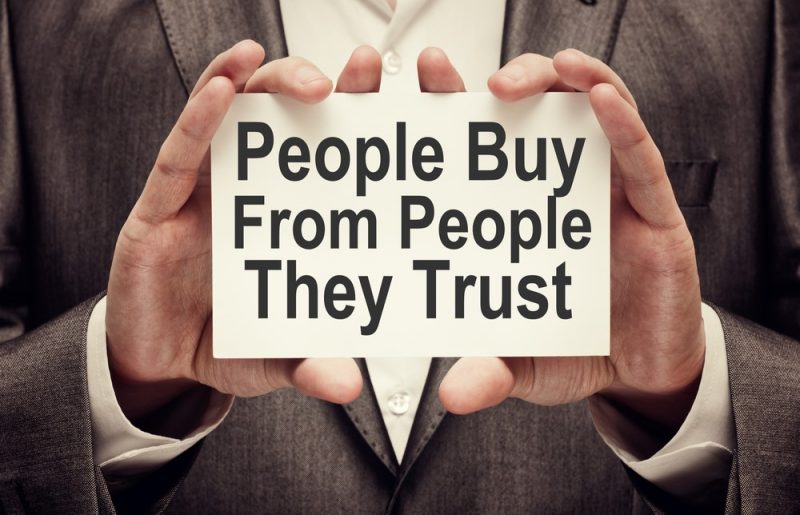
Attention Is Cheap: Here’s Why Trust Is the Real Currency
In the modern marketplace, everyone is shouting. Between the endless scroll of social media, the aggressive retargeting ads, and the “growth hackers” promising 10x visibility, we have reached Peak Attention.
Getting someone to look at your business for three seconds is easier—and cheaper—than ever. But getting them to open their wallet? That requires something the algorithm can’t manufacture: Trust.
The Mirage of Metrics
We live in an “Attention Economy,” but many entrepreneurs mistake volume for value. You can buy a million impressions, but you cannot buy a reputation.
-
Attention is a flash in the pan. It’s a click, a view, or a “like” from someone who will forget you by the next swipe.
-
Trust is a slow burn. It’s the confidence that leads to a recurring subscription, a referral to a friend, and a “yes” before you’ve even finished your pitch.
Attention vs. Trust: A Comparison
| Feature |
Attention |
Trust |
| Duration |
Ephemeral (seconds) |
Durable (years) |
| Cost |
Decreasing (commodity) |
Increasing (premium) |
| Barrier to Entry |
Low (just be loud) |
High (requires consistency) |
| Impact on Sales |
High friction |
Low friction |
| Model |
Transactional |
Relational |
The Trust Equation
Trust isn’t just a “vibe”; it’s a measurable business asset. In professional services and product development, the “Trust Equation” (developed by David Maister, Charles Green, and Robert Galford) provides a scientific way to look at why people believe in you.
The formula is often represented as:
$$Trustworthiness = \frac{Credibility + Reliability + Intimacy}{Self-Orientation}$$
-
Credibility: Do you know what you’re talking about? (The words we speak).
-
Reliability: Do you do what you say you’ll do? (Our actions).
-
Intimacy: Do people feel safe sharing information with you? (The security of the relationship).
-
Self-Orientation: This is the denominator. If your customers feel you are only in it for yourself, your trustworthiness plummets, regardless of how “credible” you are.
The “Trust Dividend”
When trust goes up, the speed of business increases and the cost of doing business decreases. This is known as the Trust Dividend.
Think about it: If a customer trusts you, they don’t spend three weeks vetting your contract. They don’t demand ten references. They don’t haggle over every nickel because they believe the value you provide is genuine.
Conversely, Low Trust is a Tax. It manifests as:
-
Redundant Layers: Extra management and oversight.
-
Bureaucracy: Endless paperwork to “protect” against the other party.
-
Customer Churn: People leave the moment a cheaper, “louder” option appears because they have no loyalty to your brand.
How to Build the Real Currency
If you want to stop chasing “eyeballs” and start building a legacy, you must pivot your strategy from reach to resonance.
1. Radical Transparency
In a world of AI-generated “perfection,” humans crave the raw truth. Admit when you’re wrong. Share your process—flaws and all. When you show your work, you remove the “black box” that breeds skepticism.
2. Consistency Over Intensity
A viral video (intensity) is great, but responding to every customer inquiry within four hours for three years (consistency) is what builds a brand. Trust is built in the “boring” moments where you simply show up as promised.
3. Under-Promise, Over-Deliver
The fastest way to bankrupt your trust account is to over-hype a product. Marketing should never write checks that the product cannot cash. Aim for the “delight” factor—where the reality of the experience exceeds the expectation set by the advertisement.
The Bottom Line
Attention gets you into the room, but trust is what keeps you there. In 2026, where digital noise is at an all-time high, the most “disruptive” thing a business can do is be unquestionably reliable.
Stop worrying about how many people are looking at you. Start worrying about how many of them actually believe you. Attention is the hook, but trust is the bridge.