
The Top 5 Highest-Earning Nigerian Bank CEOs

Quote from Adesola_M on May 23, 2026, 7:31 am
As the banking industry moves through 2026, the compensation landscape for Nigerian bank CEOs reflects the critical demands of the Central Bank of Nigeria’s (CBN) multi-billion naira recapitalization window.
While the full audited annual reports detailing the exact final payouts for the 2025/2026 financial cycle are continuing to stream out through mid-2026, compiled data from the latest statutory disclosures confirms who commands the largest compensation packages in the industry.
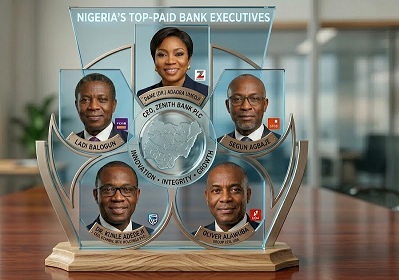
The Top 5 Highest-Earning Nigerian Bank CEOs
1. Dame (Dr.) Adaora Umeoji — Zenith Bank Plc
Remuneration: ₦874 million
Key Focus: Sustaining Tier-1 market dominance and defending asset value.
Dr. Adaora Umeoji retains her position at the absolute peak of the banking sector’s executive earnings. Despite a strategic restructuring of executive base pay compared to historical highs under her predecessor, Umeoji’s compensation matches Zenith Bank’s aggressive operational scaling. Her current mandate centers on safeguarding Zenith’s massive asset base from inflationary shocks and leading its expansion deeper into Francophone West Africa and the UK.
2. Segun Agbaje — Guaranty Trust Holding Company (GTCO)
Remuneration: ₦471.08 million
Key Focus: Lean ecosystem efficiency and digital-first expansion.
Segun Agbaje continues to justify his premium compensation structure through GTCO’s unmatched cost-to-income efficiency. As the primary architect of the holdco’s diversified model, his package is closely linked to performance across non-banking subsidiaries, including their high-growth fintech vertical (Squad), wealth management, and pension funds.
3. Ladi Balogun — FCMB Group Plc
Remuneration: ₦329 million
Key Focus: Agribusiness financing and consumer-lending growth.
Ladi Balogun has seen one of the most substantial jumps in relative executive compensation over recent cycles, climbing firmly into the top three. Drawing from over 28 years of international banking experience across Europe, the US, and Africa, his leadership has successfully repositioned FCMB as a major player in digital retail banking and investment management.
4. Oliver Alawuba — United Bank for Africa (UBA)
Remuneration: ₦254 million
Key Focus: Cross-continental risk mitigation and foreign exchange balancing.
Tasked with managing UBA’s extensive global footprint—spanning 20 African nations alongside offices in New York, London, and Paris—Alawuba’s remuneration reflects the complexity of his role. His compensation structure remains closely indexed to the bank’s ability to repatriate strong earnings from its regional subsidiaries amidst heavy currency fluctuations.
5. Dr. Kunle Adedeji — Stanbic IBTC Holdings Plc
Remuneration: ₦215 million
Key Focus: High-margin wealth management and institutional asset protection.
Dr. Kunle Adedeji commands a top-five position by successfully leading the most lucrative corporate investment and wealth management ecosystem in Nigeria. Stanbic IBTC’s dominance in pension fund administration and capital market operations keeps its executive packages highly insulated.
Executive Compensation at a Glance
Bank Executive Financial Institution Annual Package Primary Operational Mandate Dr. Adaora Umeoji Zenith Bank Plc ₦874.00 million Tier-1 Market Capitalization Base Segun Agbaje GTCO Plc ₦471.08 million Non-Banking Subsidiary Integration Ladi Balogun FCMB Group Plc ₦329.00 million Retail & Wealth Digital Transformation Oliver Alawuba UBA Plc ₦254.00 million Pan-African Subsidiary Performance Dr. Kunle Adedeji Stanbic IBTC ₦215.00 million Wealth & Corporate Investment Dominance Bolaji Agbede Access Holdings ₦180.00 million Global Mergers, Acquisitions & Synergies The Mid-Tier and Regional Echelon
Beyond the top five, other notable corporate leaders commanding premium packages include:
Mrs. Nneka Onyeali-Ikpe (Fidelity Bank): Continues to command a strong compensation structure as she steers Fidelity through a massive capital raise and a focused expansion into the United Kingdom commercial banking landscape.
Moruf Oseni (Wema Bank): Earned ₦106 million (up from ₦79 million), driven by the explosive growth of Wema’s digital banking pioneer platform, ALAT.
Wale Oyedeji (FBN Holdings): Brought in to steer the legendary first-generation banking holdco, earning a foundational ₦97 million.
Critical Trends Shaping Executive Pay in 2026
The boardrooms of Nigeria’s financial institutions are fundamentally shifting how they structure executive rewards:
The Recapitalization Factor: With the CBN’s hard deadlines Looming, boards are heavily tying variable bonuses to an executive’s ability to pull in fresh equity capital or navigate clean mergers without diluting shareholder value.
Inflationary Adjustments: Due to lingering macroeconomic realities and currency adjustments, several banks have restructured base allowances to ensure local executive packages stay competitive against international financial roles.
Non-Interest Income Metrics: CEOs who successfully grow earnings through digital platforms, electronic banking fees, and international trade lines—rather than relying solely on volatile interest margins—are seeing the biggest boosts to their performance bonuses.
As the banking industry moves through 2026, the compensation landscape for Nigerian bank CEOs reflects the critical demands of the Central Bank of Nigeria’s (CBN) multi-billion naira recapitalization window.
While the full audited annual reports detailing the exact final payouts for the 2025/2026 financial cycle are continuing to stream out through mid-2026, compiled data from the latest statutory disclosures confirms who commands the largest compensation packages in the industry.
The Top 5 Highest-Earning Nigerian Bank CEOs
1. Dame (Dr.) Adaora Umeoji — Zenith Bank Plc
-
Remuneration: ₦874 million
-
Key Focus: Sustaining Tier-1 market dominance and defending asset value.
Dr. Adaora Umeoji retains her position at the absolute peak of the banking sector’s executive earnings. Despite a strategic restructuring of executive base pay compared to historical highs under her predecessor, Umeoji’s compensation matches Zenith Bank’s aggressive operational scaling. Her current mandate centers on safeguarding Zenith’s massive asset base from inflationary shocks and leading its expansion deeper into Francophone West Africa and the UK.
2. Segun Agbaje — Guaranty Trust Holding Company (GTCO)
-
Remuneration: ₦471.08 million
-
Key Focus: Lean ecosystem efficiency and digital-first expansion.
Segun Agbaje continues to justify his premium compensation structure through GTCO’s unmatched cost-to-income efficiency. As the primary architect of the holdco’s diversified model, his package is closely linked to performance across non-banking subsidiaries, including their high-growth fintech vertical (Squad), wealth management, and pension funds.
3. Ladi Balogun — FCMB Group Plc
-
Remuneration: ₦329 million
-
Key Focus: Agribusiness financing and consumer-lending growth.
Ladi Balogun has seen one of the most substantial jumps in relative executive compensation over recent cycles, climbing firmly into the top three. Drawing from over 28 years of international banking experience across Europe, the US, and Africa, his leadership has successfully repositioned FCMB as a major player in digital retail banking and investment management.
4. Oliver Alawuba — United Bank for Africa (UBA)
-
Remuneration: ₦254 million
-
Key Focus: Cross-continental risk mitigation and foreign exchange balancing.
Tasked with managing UBA’s extensive global footprint—spanning 20 African nations alongside offices in New York, London, and Paris—Alawuba’s remuneration reflects the complexity of his role. His compensation structure remains closely indexed to the bank’s ability to repatriate strong earnings from its regional subsidiaries amidst heavy currency fluctuations.
5. Dr. Kunle Adedeji — Stanbic IBTC Holdings Plc
-
Remuneration: ₦215 million
-
Key Focus: High-margin wealth management and institutional asset protection.
Dr. Kunle Adedeji commands a top-five position by successfully leading the most lucrative corporate investment and wealth management ecosystem in Nigeria. Stanbic IBTC’s dominance in pension fund administration and capital market operations keeps its executive packages highly insulated.
Executive Compensation at a Glance
| Bank Executive | Financial Institution | Annual Package | Primary Operational Mandate |
| Dr. Adaora Umeoji | Zenith Bank Plc | ₦874.00 million | Tier-1 Market Capitalization Base |
| Segun Agbaje | GTCO Plc | ₦471.08 million | Non-Banking Subsidiary Integration |
| Ladi Balogun | FCMB Group Plc | ₦329.00 million | Retail & Wealth Digital Transformation |
| Oliver Alawuba | UBA Plc | ₦254.00 million | Pan-African Subsidiary Performance |
| Dr. Kunle Adedeji | Stanbic IBTC | ₦215.00 million | Wealth & Corporate Investment Dominance |
| Bolaji Agbede | Access Holdings | ₦180.00 million | Global Mergers, Acquisitions & Synergies |
The Mid-Tier and Regional Echelon
Beyond the top five, other notable corporate leaders commanding premium packages include:
-
Mrs. Nneka Onyeali-Ikpe (Fidelity Bank): Continues to command a strong compensation structure as she steers Fidelity through a massive capital raise and a focused expansion into the United Kingdom commercial banking landscape.
-
Moruf Oseni (Wema Bank): Earned ₦106 million (up from ₦79 million), driven by the explosive growth of Wema’s digital banking pioneer platform, ALAT.
-
Wale Oyedeji (FBN Holdings): Brought in to steer the legendary first-generation banking holdco, earning a foundational ₦97 million.
Critical Trends Shaping Executive Pay in 2026
The boardrooms of Nigeria’s financial institutions are fundamentally shifting how they structure executive rewards:
-
The Recapitalization Factor: With the CBN’s hard deadlines Looming, boards are heavily tying variable bonuses to an executive’s ability to pull in fresh equity capital or navigate clean mergers without diluting shareholder value.
-
Inflationary Adjustments: Due to lingering macroeconomic realities and currency adjustments, several banks have restructured base allowances to ensure local executive packages stay competitive against international financial roles.
-
Non-Interest Income Metrics: CEOs who successfully grow earnings through digital platforms, electronic banking fees, and international trade lines—rather than relying solely on volatile interest margins—are seeing the biggest boosts to their performance bonuses.

Quote from JobberGirl on May 23, 2026, 8:17 am₦874 million for one person in this economy? Lord, if I am a stone, please roll me to Zenith Bank. Adaora Umeoji is earning my generation’s combined lifetime destiny in twelve months.
₦874 million for one person in this economy? Lord, if I am a stone, please roll me to Zenith Bank. Adaora Umeoji is earning my generation’s combined lifetime destiny in twelve months.

Quote from KayodeK on May 23, 2026, 8:28 amAnd my bank is still charging me ₦6.98 for electronic transfer fees. Now I know exactly whose salary that maintenance fee is paying for. Inside life.
And my bank is still charging me ₦6.98 for electronic transfer fees. Now I know exactly whose salary that maintenance fee is paying for. Inside life.

Quote from KemiK3 on May 23, 2026, 8:32 amQuote from KayodeK on May 23, 2026, 8:28 amAnd my bank is still charging me ₦6.98 for electronic transfer fees. Now I know exactly whose salary that maintenance fee is paying for. Inside life.
They should probably change it to salary maintenance fee😀
Meanwhile, the average graduate trainee in some of these banks is collecting ₦150k a month and working 14 hours a day including Saturdays. The gap between the rich and the poor in Nigeria is wider than the Atlantic Ocean
Quote from KayodeK on May 23, 2026, 8:28 amAnd my bank is still charging me ₦6.98 for electronic transfer fees. Now I know exactly whose salary that maintenance fee is paying for. Inside life.
They should probably change it to salary maintenance fee😀
Meanwhile, the average graduate trainee in some of these banks is collecting ₦150k a month and working 14 hours a day including Saturdays. The gap between the rich and the poor in Nigeria is wider than the Atlantic Ocean

Quote from Amina_A on May 23, 2026, 8:39 amAdaora Umeoji’s salary can single-handedly pay off my student loan, buy me a 3-bedroom bungalow in Lekki, and I’ll still have enough left to buy premium fuel for my generator till 2030.
Adaora Umeoji’s salary can single-handedly pay off my student loan, buy me a 3-bedroom bungalow in Lekki, and I’ll still have enough left to buy premium fuel for my generator till 2030.

Quote from babbiz on May 23, 2026, 9:17 ammpressive numbers, but we must look at the Cost-to-Income ratios. Segun Agbaje’s lean ecosystem strategy remains the gold standard for efficiency in sub-Saharan banking. The compensation is fully justified by the ROE.
mpressive numbers, but we must look at the Cost-to-Income ratios. Segun Agbaje’s lean ecosystem strategy remains the gold standard for efficiency in sub-Saharan banking. The compensation is fully justified by the ROE.

Quote from Yahaya_Y9 on May 23, 2026, 3:27 pmLadi Balogun sitting pretty at number 3. FCMB might look quiet, but those guys are silently collecting money from local farmers and retail shoppers. Silent movers!
Ladi Balogun sitting pretty at number 3. FCMB might look quiet, but those guys are silently collecting money from local farmers and retail shoppers. Silent movers!

Headlines:
Latest Forum Topics
- Where Comfort Meets Confidence
- Defending champions Remo Stars doomed for relegation
- Enugu Rangers Win NPFL
- NPFL Final Day :Who Wins Nigeria\'s 2025/2026 Premier League?
- ‘We Did It’ — Ajayi Celebrates Hull City Premier League Promotion
- COUP PLOT: DOCUMENT REVEALS PROPOSED POWER STRUCTURE IF TINUBU, OTHERS WERE KILLED
- preserving evidence privately is wiser than chasing public validation online
- Why do men like a woman’s big yansh or nyash
- Government Negotiates With Oyo School Kidnappers
- Governorship Ticket : Rivers ADC Splits Into Factions
- Venezuela’s Oil Paid For Cost Of Iran War ’25 Times Over -Trump
- Onuachu’s Brace Fires Trabzonspor To Turkish Cup Glory
- Business and Funding Opportunities.23.5.2026
- Jobs @23.5.2026
- The Top 5 Highest-Earning Nigerian Bank CEOs
- Meet Segun Aina who started at JAMB as corps member, now registrar
- Inside the Nigerian Multi-Billion Dollar Luxury Fashion Industry
- Top 10 states with the largest internet subscriptions in 2025
- The Missionary Sex Position: History, Benefits, and Variations
- Disinflation Reversal Strains Households as Headline Inflation Hits 15.69%